BUSINESS & BRAND
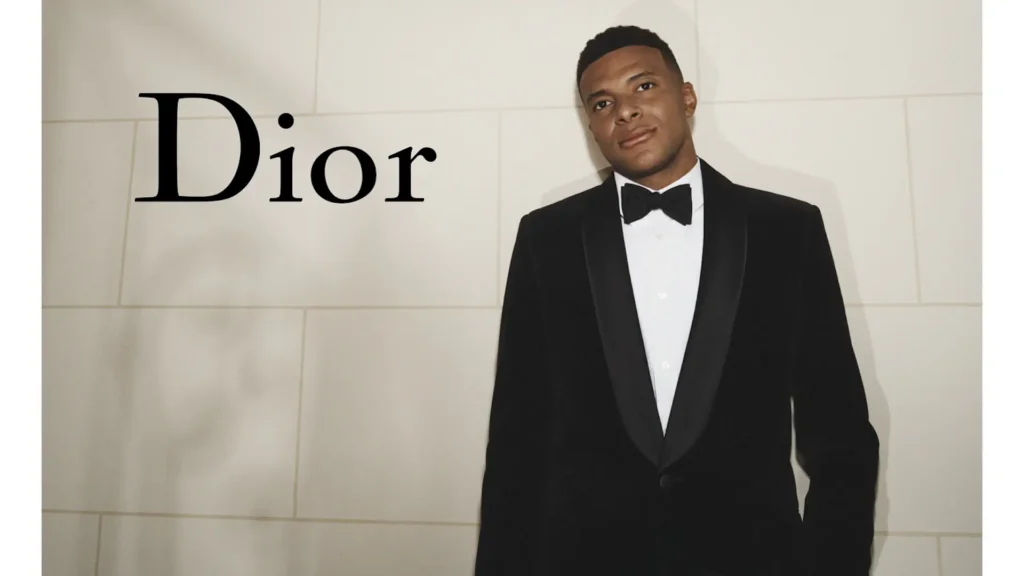
Kylian Mbappé appeared in a Dior campaign. That sentence would have been unusual five years ago. Today it is a statement of category. He is not a footballer who endorses a fashion brand. He is a cultural figure who happens to play football — and Dior made that positioning explicit when they signed him. The commercial structure of a luxury fashion deal, however, is fundamentally different from a sports equipment contract. Understanding the difference reveals how Mbappé has built a brand that operates across two entirely separate economics.
€20-25M estimated total annual endorsement income · Dior: luxury ambassador category · Nike: sport equipment exclusivity · Zero category conflicts between the two
How luxury fashion ambassador deals are structured
A luxury fashion ambassador deal is not a sponsorship in the traditional sports sense. It does not pay based on performance metrics or tournament results. It pays for image: the right to associate the brand’s visual identity with the athlete’s face, body, and cultural positioning. The fee structure typically involves an annual retainer for image rights usage, a campaign fee for each specific activation (print, digital, runway appearances), and an exclusivity payment covering competing luxury fashion houses. For a global cultural figure at Mbappé’s level, annual Dior income is estimated in the €3-6M range — smaller in absolute terms than Nike, but structurally uncorrelated with sports performance.
Nike vs Dior: the different commercial logics
Nike pays Mbappé for what he does on the pitch: goals scored wearing Nike boots, visibility in matches watched by billions, and the commercial halo effect of his on-field performance. If he is injured and misses three months, that visibility drops. His Nike activation value in those months is reduced. Dior, by contrast, operates on a different axis entirely. A Dior campaign is produced months in advance. The brand’s association with Mbappé is not contingent on whether he played last Saturday. It is a cultural investment, not a performance-linked asset. This is why luxury fashion deals add genuine diversification to an athlete’s commercial portfolio — they hedge against injury disruption.
Why Dior chose Mbappé — and what it signals about his positioning
Dior’s previous major male ambassador was Johnny Depp, then Robert Pattinson. Both are actors with strong aesthetic profiles and global cultural reach. Signing a footballer to that tier of luxury brand representation is a deliberate repositioning signal — both for Dior and for Mbappé. For Dior, it accesses a younger, more diverse global male audience through the world’s most followed sport. For Mbappé, it is a credibility signal in the luxury and cultural space that no sports endorsement can replicate. The deal changed the ceiling of what other luxury brands were willing to pay.
The full endorsement stack and how it avoids cannibalization
Mbappé’s current endorsement portfolio — Nike (sport), EA Sports (gaming), Dior (fashion), Hublot (watches), Oakley (eyewear) — has been constructed to avoid category cannibalization. Each brand occupies a distinct consumer segment and contractual exclusivity window. Nike holds sport equipment exclusivity. Dior holds luxury fashion exclusivity. Hublot holds watches. None of them conflict. The result is a diversified commercial portfolio generating an estimated €20-25M per year in off-field income — resilient across different economic cycles and audience segments.
Related: The Mbappé Financial Empire · Mbappé Net Worth 2026

About the author
Victor Blanc
Football Business Correspondent at Mbappé Live. Covers contracts, sponsorships, investment strategy, and the financial architecture behind elite sport.