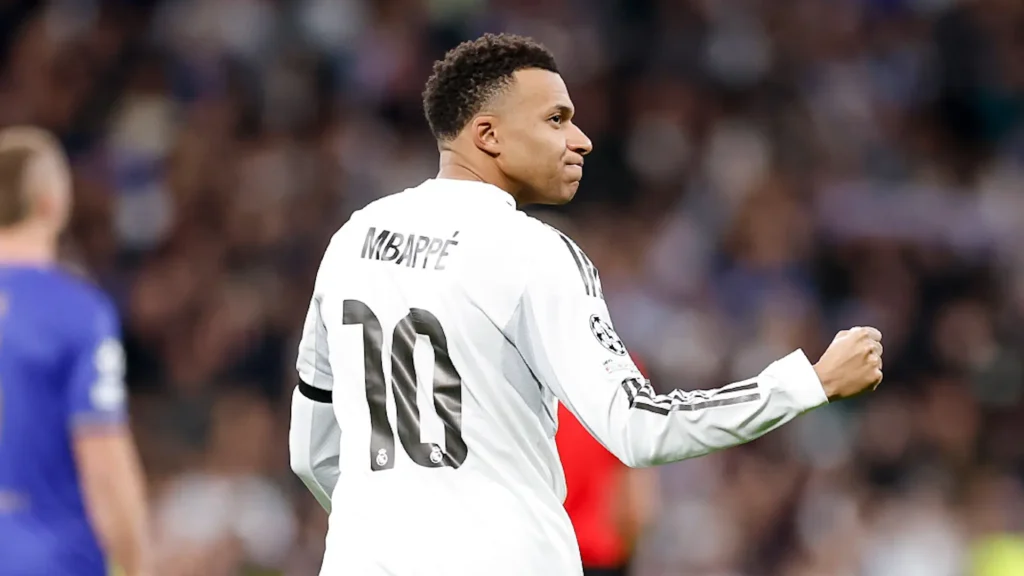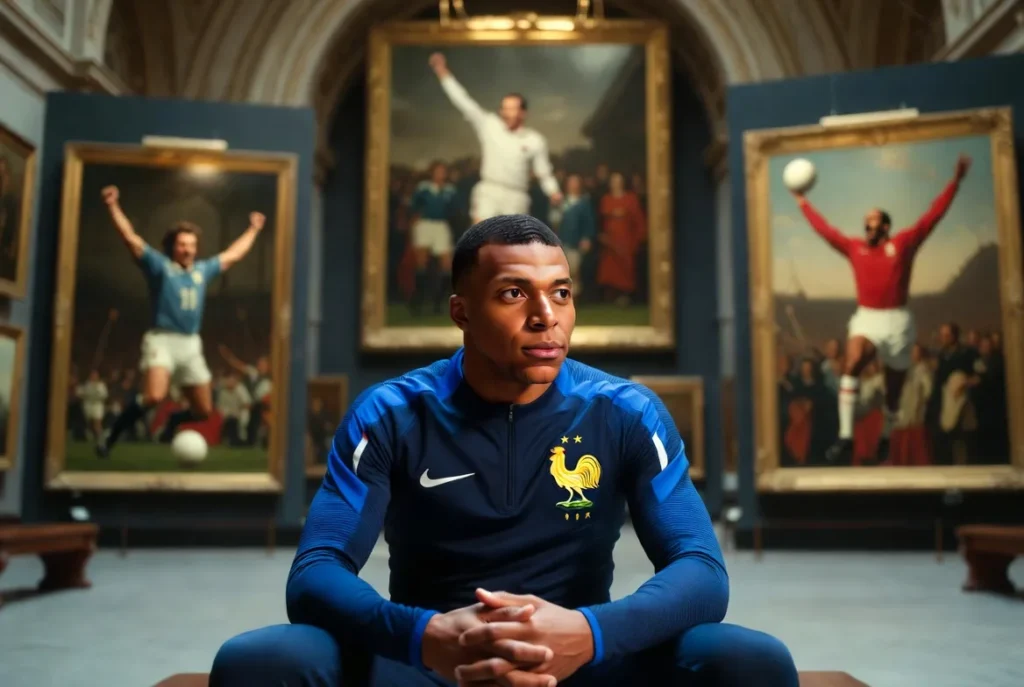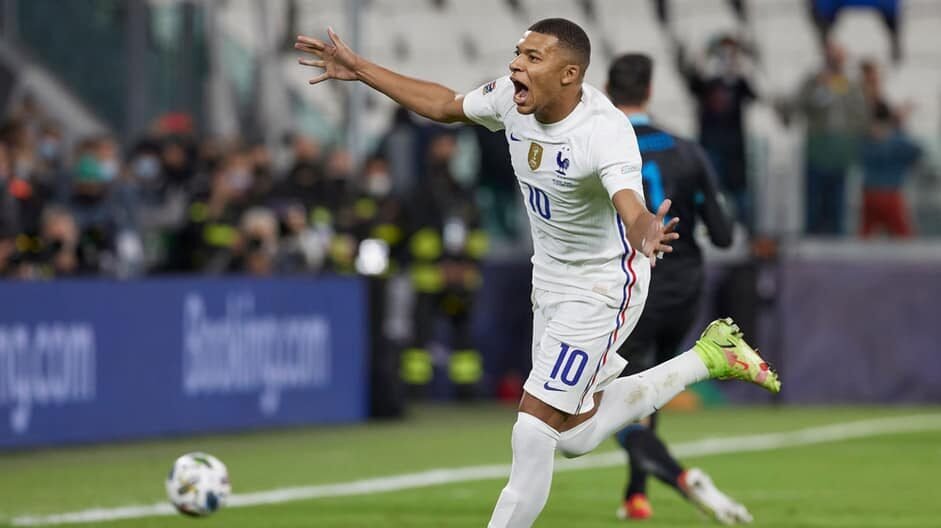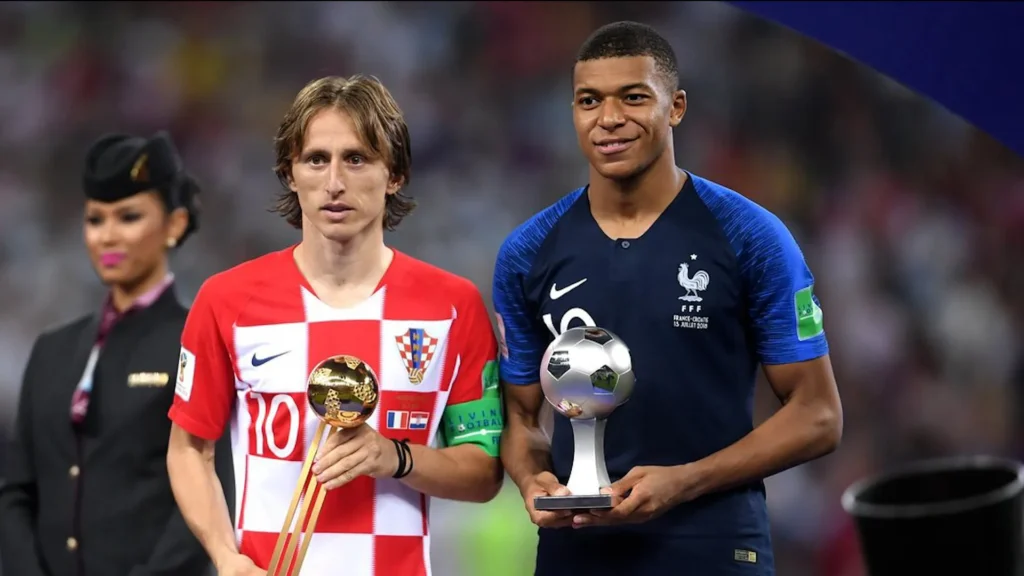
The question surfaces every time Mbappé misses a header or loses a physical duel: at 178cm, is he too small for the demands of elite football? It is one of those critiques that feels intuitive until you examine what it is actually claiming — and then the numbers make short work of it.
The height comparison set
At 178cm, Mbappé is shorter than most of the forwards he is typically compared to: Erling Haaland (194cm), Robert Lewandowski (184cm), Harry Kane (188cm). He is closer in height to Lionel Messi (170cm), Romario (168cm), and Pele (173cm). That company should be sufficient to end the conversation, but it rarely does. The implicit version of the “too small” argument is not about historical greats — it is about the specific physical demands of the modern La Liga striker role, in which aerial duels, hold-up play, and contact resistance are frequent requirements.
The relevant data: in La Liga 2025–26, Mbappé ranks first among forwards in sprint distance per 90 minutes and first in total chances created from run-in-behind. He ranks lower in aerial duel success rate — where 178cm is genuinely limiting — but that metric is close to irrelevant to his actual style of play. He does not play as a target man. Judging him by aerial statistics is like measuring a sprinter’s bench press.
The Height Paradox
The data refutes the “too small” intuition. Compared to historical icons or his 2026 rivals, Mbappé’s 178cm frame sits exactly in the lethal strike-zone of efficiency and acceleration.
Lower centre of gravity: the biomechanical advantage
In applied sports science, a lower centre of gravity is associated with superior balance during directional changes, faster acceleration from a standing start, and greater stability under contact. A 178cm forward with Mbappé’s muscle distribution is harder to knock off the ball in a 50-50 than a 190cm striker whose centre of mass is higher and whose deceleration radius is longer. This is not a consolation argument. It is a biomechanical reality that explains why shorter strikers with elite acceleration consistently outperform height-based predictions in contact-heavy leagues.
Mbappé’s top recorded speed of 36.0 km/h is not separable from his height. His acceleration profile — the rate at which he reaches that speed from a standing start — is directly enabled by the leverage mechanics that a shorter frame provides. Taller athletes take more strides to reach equivalent speeds, and their deceleration is correspondingly longer. In the first three seconds of a sprint behind a defensive line, those differences are decisive.
What the 2025–26 Champions League numbers say
The most direct refutation of the “too small” argument is his current UCL record: 13 goals in 9 appearances in 2025–26, making him the campaign’s top scorer by 3 goals. His second-fastest hat-trick in UCL history (6 minutes 42 seconds) required no aerial contribution. His xG of 9.19 against 13 actual goals reflects an overperformance of 41% — the most dramatic conversion surplus in the competition this year.
None of those goals were scored from headers. Almost all were generated from pace, positioning, and finishing technique. The 178cm frame is not a limitation in that sequence. It is the mechanism. For the full statistical breakdown of his finishing efficiency, see our xG analysis.
The real limitation: and it has nothing to do with height
The one genuine structural weakness in Mbappé’s game is his offside rate — a direct consequence of his acceleration, not his height. He anticipates the ball faster than most players because he moves faster than most players. The result is a tendency to break the line by half a second too early. Opposing managers who want to limit him consistently deploy a high line and rely on the offside trap. It is the only tactical tool that has shown consistent effectiveness.
Height does not feature in that analysis. The “too small” argument is a category error — applying a physical metric that belongs to a different type of striker to a forward whose game is built entirely on a different physical architecture. For a full breakdown of how that architecture translates across both feet, see our left-foot breakdown.
— Victor Blanc | Mbappé Live

About the author
Victor Blanc
Football Business Correspondent at Mbappé Live. Covers contracts, sponsorships, investment strategy, and the financial architecture behind elite sport.