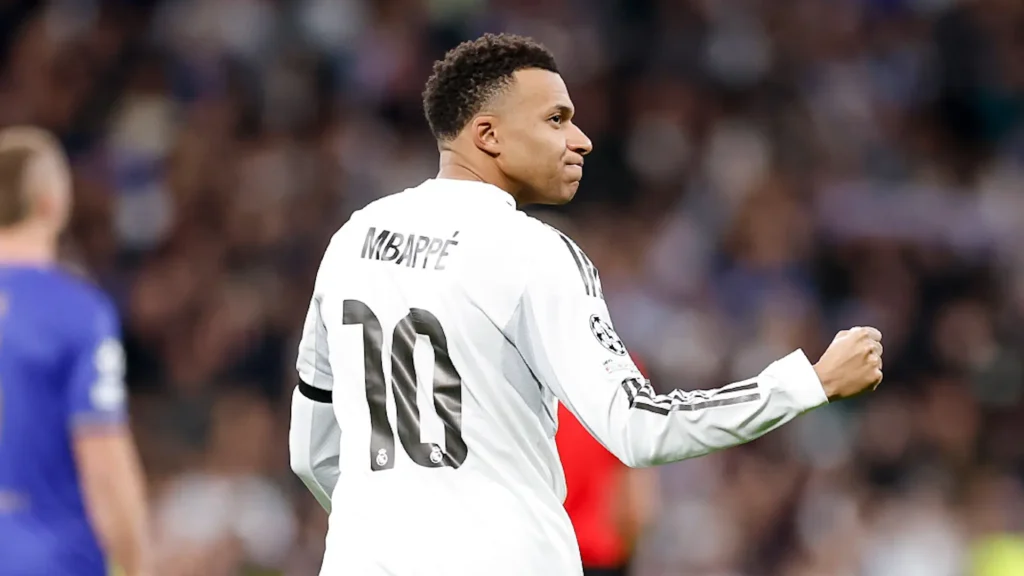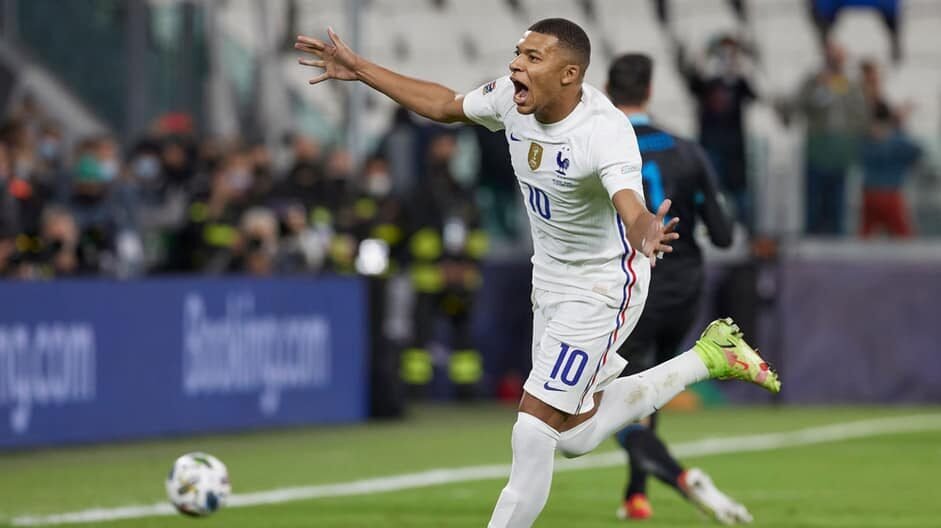
Kylian Mbappé scores goals. That much is beyond dispute — 15 in 11 Champions League appearances this season, a record-breaking pace that keeps him firmly in the conversation for the greatest forwards of his generation. But strip away the goals, and a very different picture emerges. One that Real Madrid’s coaching staff cannot afford to ignore.
55th out of 57. Let that sink in.
When ranking forwards by total pressing actions per 90 minutes in the Champions League, Mbappé sits 55th out of 57 strikers analysed. His output? Just 4.65 pressing actions per 90 minutes. In a competition where elite pressing has become as fundamental as finishing, that number is borderline alarming.
It means that when Mbappé is on the pitch, Real Madrid’s head coach is effectively fielding a striker who contributes almost nothing to the team’s defensive structure. In tactical terms, opponents can comfortably build out from the back through Mbappé’s channel, knowing the Frenchman won’t come hunting.
The paradox: when he does press, he’s good at it
Here is where the data gets genuinely interesting — and paradoxical. Despite ranking near the bottom for total pressing volume, Mbappé actually ranks 3rd among all 57 forwards for press success rate. In other words, when he chooses to engage, he more often wins the ball back than almost any striker in the competition.
The conclusion is unavoidable: this is not a player who can’t press. It’s a player who simply doesn’t.
The quality is there. The willingness is not.
High-intensity pressing: still room for significant improvement
A second layer of data reinforces the concern. On high-intensity pressing actions specifically — the hard, sprint-based pressures that define modern gegenpressing — Mbappé ranks 45th out of 57 forwards for volume. His success rate on those high-intensity pressures? 35th out of 57.
Both figures land in the bottom half of the field. And unlike the curious paradox of his standard pressing stats, there is no silver lining here. His intensity when pressing at full effort is simply below the standard expected of a striker at the highest level of European football.
What this means for Real Madrid
The tactical implication is significant. Every manager who sets up against Real Madrid knows that Mbappé will not aggressively hunt the ball in the first phase of the opposition’s build-up. That is not just a small inefficiency — it is a structural concession that opponents can plan around.
In the modern game, top forwards like Erling Haaland, Harry Kane, or Lautaro Martínez contribute meaningfully to their team’s press. They force errors, disrupt rhythm, and set the tempo before the ball even reaches the midfield. Mbappé’s data suggests he is operating in a different, more selective register — saving his physical energy for the moments that matter to him most.
Whether that trade-off — elite finishing versus minimal pressing contribution — is acceptable at Real Madrid is ultimately a philosophical question for the club’s head coach. But the numbers make one thing undeniably clear: in the Champions League’s defensive rankings, Mbappé is closer to a passenger than a participant.
And at €200 million value, that is a conversation worth having.

About the author
Victor Blanc
Football Business Correspondent at Mbappé Live. Covers contracts, sponsorships, investment strategy, and the financial architecture behind elite sport.