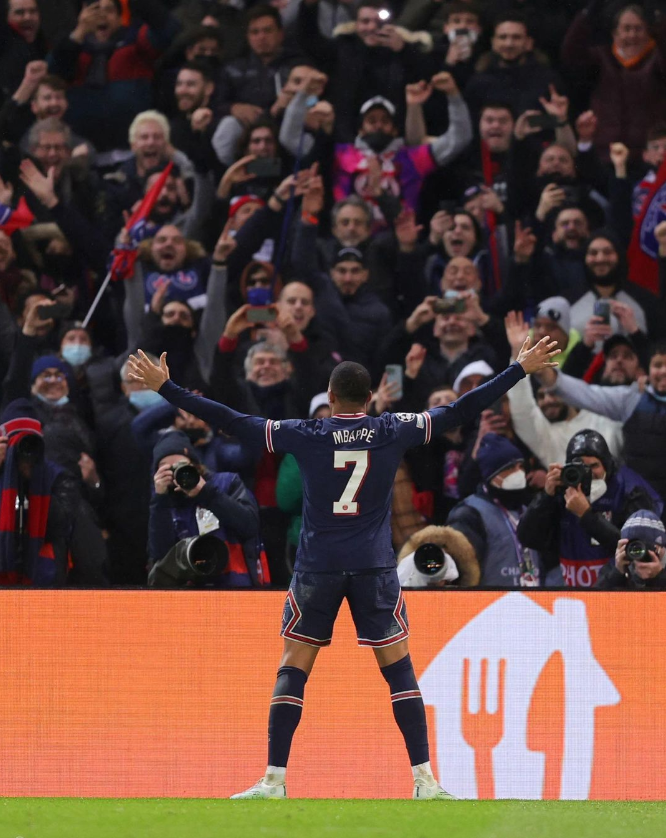
Is Mbappe Too Small for the Real Madrid Era?
By Monsieur Sauvage
Since his arrival at the Bernabéu, a recurring whisper has haunted the terraces: Is Mbappe too small? At 1.78m (5’10”), he doesn’t tower over defenders like Haaland or Ibrahimovic. In a league like La Liga, where physical intimidation is a defensive art form, critics wonder if he lacks the “stature” of a traditional Madrid number 9.
Let’s be surgical: the question itself reveals a fundamental misunderstanding of modern football physics.
The Myth of the “Small” Forward
If you think 1.78m is “small,” you’ve forgotten history. Pelé was 1.73m. Romário was 1.67m. Being “too small” is only a problem if you intend to win headers against 2-meter tall center-backs. But Wilfried Mbappe (read our exclusive power analysis on Wilfried) didn’t build Kylian to be a target man. He built him to be a projectile.
Mbappe’s height gives him a lower center of gravity, allowing for a torque and acceleration that a taller player simply cannot replicate. He isn’t too small; he is the perfect size for speed.
Physical Stature vs. Pitch Presence
The Real Madrid system in 2026 doesn’t need a giant; it needs a ghost. Someone who can disappear into the blind spots of the defense and reappear at 36km/h. Mbappe’s 1.78m frame is his greatest asset—it allows him to weave through tight spaces where larger players would get “trapped” by their own mass.
Size is a Distraction
Let’s look at the cold facts. Critics asking “Is Mbappe too small?” are usually the same ones who can’t explain why he’s already outscored most “large” strikers in Champions League history.
Size is a metric for boxers. In football, the only measurement that matters is the gap between the forward and the defender at the moment of the strike. If you’re still obsessing over his height, you’re looking at the man, not the machine.